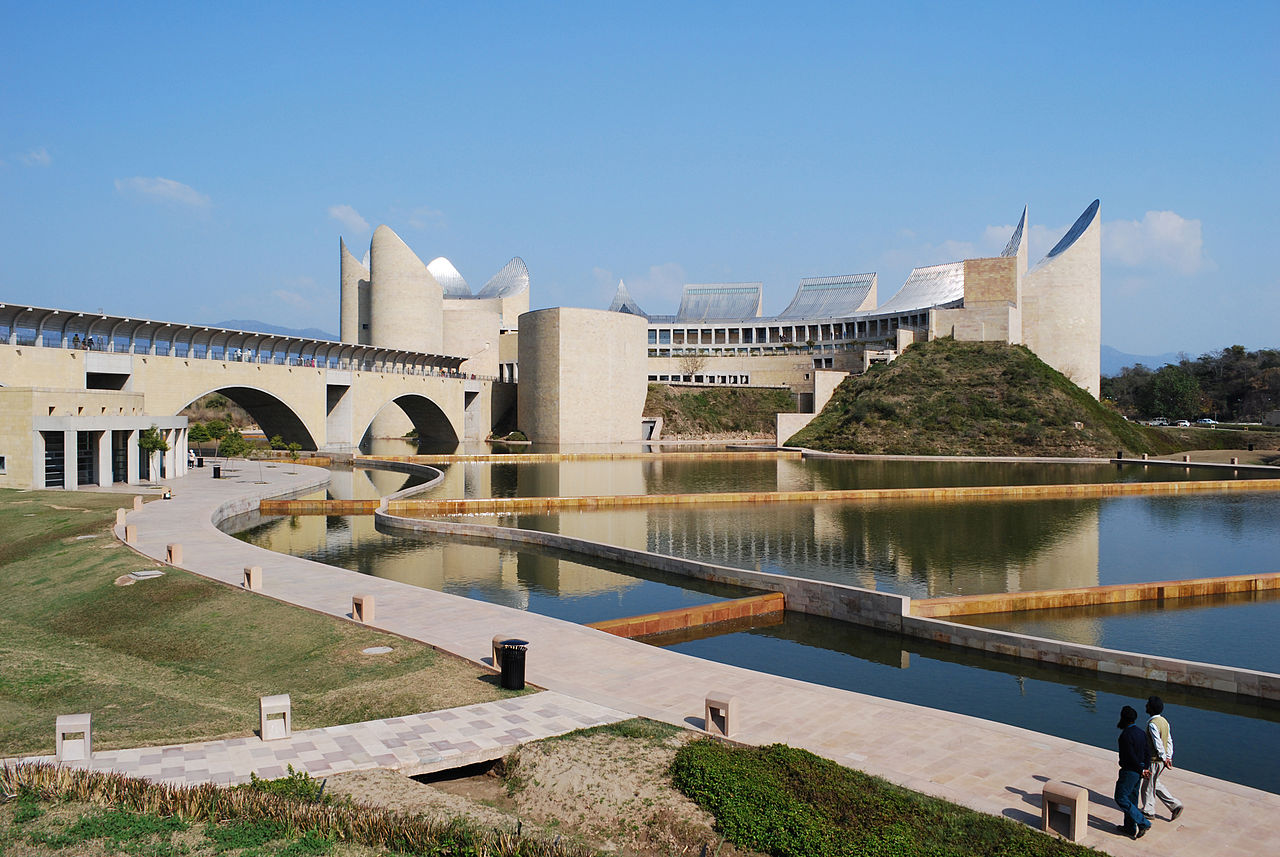
Virasat-e-Khalsa, spread across two dramatic complexes linked by a 165-metre pedestrian bridge over a ravine in Anandpur Sahib, is India's most-visited museum and the finest work of Sikh heritage curation anywhere. Designed by Israeli-Canadian architect Moshe Safdie and opened in 2011, its five stainless-steel petal roofs echo the domes of gurdwaras while its sandstone walls rise from the Shivalik hills. The permanent exhibition traces 500 years of Sikh history from Guru Nanak to the modern era across 27 galleries, using illuminated panoramas, dioramas and immersive soundscapes rather than glass-case artefacts.
It's the perfect afternoon pairing with Takht Sri Kesgarh Sahib (across the ravine) and easily earns half a day in its own right. Since 2017 entry has been free — you simply collect a token at the entrance and choose an audio guide (English/Punjabi/Hindi, also free). The two most powerful galleries deal with the martyrdom of Guru Arjan Dev and the story of the Chali Mukte; both use full-room projections. Photography inside is not permitted, so put the phone away and take it in. Closed all Mondays.
The minimum you must see
Tips
Arrive by 10:30 to comfortably see all 27 galleries before the 17:30 last entry.
It's closed on Mondays — don’t build your Anandpur Sahib trip around a Monday.
The audio guide (free) is essential; the panels alone are brief.
Questions, answered
Hotels near Virasat-e-Khalsa
See all stays →Curated picks are coming — meanwhile, the live search covers every bookable property at the same price or better.